Haltech Platinum Can Be Tune

Haltech Platinum Can Be Tune
Haltech Platinum

Thursday, February 3, 2011

Nitrous Oxide (NOS)


Why would you want to put nitrous oxide injection in your car?

Because it's the easiest, most powerful and cheapest way to produce horsepower!
I get a lot of emails with questions about nitrous, "what's nitrous?", "how does it work?", "will it blow up my engine?", "how much does it cost?". The purpose of these pages is to answer questions like this, my goal is to have something here for everyone, from complete beginners to experienced nitrous heads.
The main reason that people want to put nitrous in their Miatas is that they want some extra power now and then. They don't want the high cost and complicated installation of a turbo or supercharger kit. Or they are complete power junkies like me and want the nitrous on top of the turbo!
These are all very good reasons to get a nitrous system!


"Is it complicated to install?"
A nitrous system is easy to install, you mount a bottle in the trunk, you route a small tube from the bottle to the engine compartment, you mount a few small things under the hood, you install an injector in the intake, you make a few electrical connections and you're done! That's all there's to it.

"How can this stuff make hp?"
Simplified you can see nitrous oxide as "Super air", it's just like air but with more oxygen in it. Engines produce horsepower by burning fuel, that means that the fuel (usually gasoline) reacts with the oxygen in the air. Nitrous oxide by it self doesn't give you any more hp, just more oxygen. The trick is that with more oxygen you can burn more fuel and thereby produce more hp!

"How do you use it?"
Some people think that you flip a switch and then the nitrous (and extra fuel) is flowing and you just hold on for dear life. That is not how a modern nitrous system works (or should work). The system actually contains three controls, the first one is that you have to open the valve on the bottle (usually in the morning and then you close it at night), the second one is an arming switch mounted somewhere in the cockpit. Unless that switch is on, nothing will happen under any condition. The third switch is usually mounted under the hood, next to the throttle. It's a small micro switch that closes (meaning it's on) when you push the gas pedal to the floor, it only activates when you have wide open throttle (WOT). When all these three controls/switches are "on", the nitrous and the extra fuel is injected into the engine. This makes a modern nitrous system very safe, if something isn't right (engine doesn't sound right, tires are spinning too much, the cops are approaching, ...), just release the gas pedal as you normally would and the nitrous will instantly be turned off. It can't be much simpler than that, every condition except WOT and the car will behave as if it has never even heard of nitrous, but push the load pedal to the floor and you'll have the ride of your life!

"Can the engine really handle it?"
Mazda GTX 1.8L engines are very tough, it was originally designed as a turbo charged engine and can handle a lot of hp. "But nitrous isn't the same as turbo?", No it isn't, but most of the things that makes a good turbo engine also makes it a good nitrous engine. If you want to make a career at the drag strip, you will have to make some serious engine modifications (just as if you would use a turbo), but if you want an extra kick in the back when that pesky Wira Turbo's is pestering you, the stock engine is just fine.

"Can I abuse the engine as much as I want to?"
No you can't. There are certain rules you have to follow if you want to live a happy nitrous life. The first thing you have to think about is, NEVER EVER let it run lean. A lean condition (meaning that there is not enough fuel for the available oxygen) is very destructive to an engine and especially when you're running nitrous. The temperature in the cylinder gets very high and the fuel detonates instead of burns. The probable outcome is melted pistons, burnt valves, blown head gasket, cracked head or other unpleasant things.
The next thing is, don't try to force your engine to do things it doesn't like. If you have a turbo or a supercharger or even nothing at all, it will not make much power at low rpms. Put in 5'th gear and slow down to 1000 rpm, now push the pedal to the metal and the car will start to accelerate, very slowly, because the engine doesn't produce much hp at that speed. Nitrous is completely different, as soon as you hit WOT (with the system armed) it will inject a fixed amount of nitrous and fuel. It doesn't care if the engine is at 1000 rpm or 7000 rpm, it will do the same thing. If you have the nitrous system set for 50 hp, it will add 50 hp even if the engine is at 1000 rpm. Since the system injects a fixed amount regardless of rpm, the lower the rpm, the more nitrous will burn per power stroke. At low rpm's that creates a very high cylinder pressure and can cause problems. The solution is simple, don't engage the nitrous (i.e. no WOT) at too low rpm. "How low is too low?". It depends on how much hp the nitrous is set for and which gear you are in. If you have a 50 hp setting, don't engage under 2000 rpm in 1-3 gear and not under 2500 rpm in 4-5. For a 75 hp setting increase each with 500 rpm. "This sounds dangerous!". No it isn't if you keep it in mind. If you feel that you want some extra security, it's easy to put in an rpm-switch that will block the nitrous until a certain rpm is reached.
The third thing you should think about is, don't hit it too long. It's the same thing as with turbo or supercharger systems, when they produce this wonderful power they also generate a lot of heat. Don't push the pedal to the floor and keep it there until you reach the rev limiter in 5'th. Long hard pulls generate a lot of heat and pistons and valves are sensitive to that. If you want to see how fast it goes, push it 99% (just before the nitrous engages) until it doesn't go any faster and then engage the nitrous.
One last thing, DON'T EVER engage the nitrous unless you are in gear with your foot OFF the clutch. Don't even try just to see if I'm right, your engine will reach 10000 rpm before your next heart beat and the result it NOT pleasant.
And related to that, if you are tinkering under the hood, keep the nitrous unarmed. If the engine is running and you accidentally engage it, see above. If the engine isn't running and you accidentally engage it, don't even think about starting it, even if you "hit" just for a millisecond. Unscrew your spark plugs and crank it for a long time.


APT do a lot of installation and tuning on Dyno for Turbo and NA engine,Pls contact for more information.


Price for NOS

Basic Dry Set,Toggle switch,Bottle 10 lb,Jet spray,Solenoid,Fitting and Nozzle  RM2500
Basic Wet Set,Toggle switch,Bottle 10 lb,Jet spray,Solenoid,Fitting and Nozzle  RM2900
Basic Dry Set,Toggle switch,Bottle 2 lb,Jet spray,Solenoid,Fitting and Nozzle  RM2350


Advancedperformancetuning@gmail.com

Dyno Tuning


Dyno Jet with Retarder and Load


 Why is Dyno Tuning such a critical part of a performance upgrade?

Performance upgrades are not inexpensive. You want measured results of your investment. But a Dyno map is much more than knowing your torque and horsepower; it tells our factory-trained technicians how efficient the engine is working. Want to MAXIMIZE your investment and run more efficiently? Then opt for the Dyno run and tune.

Choose a level of Dyno Tuning:


Dyno Run
Includes basic Dyno run with three pulls; air/fuel ratio checks
Measured results of your performance parts investment


Dyno Run and Tune
Includes basic Dyno run with three pulls; check and adjust air/fuel ratio
Run more efficiently and maximize your performance parts investment


Dyno Custom EFI Mapping
Includes custom fuel injection mapping for Haltech and Microtech; check and adjust air/fuel at every throttle position
Run at optimal performance and realize possible horsepower and torque gains


Performance shops looking for a Dyno tuning facilities please call for information and prices.


We also accept reservations on Saturday for tuning 5 cars and above


Pls Contact
Email: advancedperformancetuning@gmail.com

Wednesday, February 2, 2011

Building Your Street Engine


Building Your First Engine on a Budget

Evo Stock Engine

2JZ engine

D15 Turbo

D16 Turbo


Wiseco Piston


PAR rod


Crank Balance

 
VR4 Cleaning

 
EVO6 Build

 
PAR 1000hp Rod

 
Evo Engine


Wet Blast Cleaning


Intake Manifold


THE PLENUM

The main purpose of the plenum is to equalize the air flow to the various cylinders, but its volume and shape, as well as the shape of the bell mouths, which are the opening to the runners, are also important. Generally, a plenum volume of approximately 80% of engine capacity for naturally aspirated engines to 150% of engine capacity for turbocharged engines works best.
In terms of function, the best plenum design would have the air duct feed the center of the plenum. Unfortunately, due to space limitations and production costs, manufacturers tend to build plenums that are fed from one end, with the plenum blocked off at the other end. This results in air rushing to the far end of the plenum and creates a slight imbalance of air flow to the individual cylinders are the air will tend to flow past the first cylinder and collect at the far end of the cylinder, which is usually at the last cylinder. Consequently, the first cylinder will run slightly lean while the last cylinder will run slightly rich.

The easiest solution to this problem is to fit a second throttle body to the far end of the plenum and fit a double air filter, intake system. But this only works on naturally aspirated engines that have sufficient space for a second intake system. On supercharged and turbocharged engines this solution is not feasible and you would need to modify the plenum or fit an aftermarket intake manifold with a more efficient air flow and air distribution design. There are three things you must consider when modifying the plenum or selecting an aftermarket intake manifold.
  • First, the plenum should increase in size rapidly well before the first cylinder.
  • Second, the plenum can taper towards the end from after the first cylinder but it should not taper to less than 1½ times the diameter of the intake runners.
  • Third, the plenum should extend well beyond the last cylinder.

INTAKE RUNNERS

As is the case with the primary exhaust pipes, the diameter and length of the intake manifold runners influence the power curve of the engine. The intake runner diameter influences the point at which peak power is reached while the intake runner length will influence the amount of power available at high and low RPM.
A larger diameter intake runner will result in improved engine breathing at high RPM and will take peak engine power to a higher RPM but will have little low RPM power. This may be good for a modified race car or a drag car, but will not be good for a turbocharged car with a large turbocharger. For a good responsive modified street car or a rally car you would want an intake manifold runner diameter that is approximately 80% the size of the intake valve diameter on a two-valve cylinder, or the same size as the intake valve diameter on a four-valve cylinder. For a high performance modified race car or a drag race car you would want an intake manifold runner diameter that is approximately 90% the size of the intake valve diameter on a two-valve cylinder, or approximately 110% the size of the intake valve diameter on a four-valve cylinder.
In terms of intake manifold runner length, a longer intake runner produces better power at high RPM, while a shorter intake runner produces better power at low PRM. Generally, an intake manifold runner that is in the region of 300-400 mm long will sustain power at high RPM but little power at low RPM while an intake manifold runner that is in the region of 200-300 mm long will start building power from low RPM but will run out of power soon after peak power is reached. But note that the intake port on the cylinder head forms part of the intake runner. Thus the intake runner length is measured from the intake valve seat to the intake runner bell mouth, and not from the end of the intake manifold.


CNC Intake Flange

Mira L2 turbo


Custom Intake Price

1.Evo 1,2,3 RM1500
2.VR4 RM1500
3.Gen2 RM1300
4.Campro CPS RM1200
5.Evo 4,5,6 RM1600
6. 4G93 GSR Turbo RM1400
7. Honda B16 RM1400
8.Honda B18 RM1400
9.Mivec RM 1400
10.Mivec CK RM1400
11.Mira(kancil)L2 RM1100
12.Evo 7,8 RM1600


APT Custom Intake


Advancedperformancetuning@gmail.com


Fuel Injector System


One look at the fuel injectors on your car, and you'll wonder how they work at all, not to mention for tens of thousands of miles. Fuel injectors allow us to get gas mileage at the same time we develop additional horsepower and cleaner emissions.
The only thing your fuel injectors require in return is a steady supply of clean gasoline. That's why the fuel filter is so important to your fuel injectors--even a tiny piece of dirt or crud can foul up the mechanism inside your fuel injectors, so replacing your fuel filter regularly is essential. When your car left the factory, it may have been equipped with fuel injectors that leaned more towards the economy side of the equation than the performance side. With aftermarket fuel injectors, you can swing that equation over to the power side.


How does a fuel injector work?
A fuel injector is nothing more than a high-speed valve for gasoline. An engine computer or controller is used to control the fuel injector. Contrary to popular belief, this is not done by sending power to the injector. Fuel injectors are normally fed power whenever the ignition key is on. The computer controls the negative, or ground side, of the circuit. When the computer provides the injector with a ground, the circuit is completed and current is allowed to flow through the injector. This energizes an electromagnetic coil inside the injector, which pulls a sealing mechanism (pintle, ball, or disc) away from its seat. This makes it possible for fuel to flow through the injector and into the engine. When the computer removes the electrical ground to the injector, the electromagnetic coil becomes demagnetized and a spring forces the pintle, ball, or disc shut to cut off fuel flow. Even at an engine speed of just 1000 RPM , this is done hundreds of times per minute.


What do the terms “static” and “duty cycle” mean?
An injector in an engine turns on and off very quickly to control the amount of fuel delivered. The amount of time an injector is turned on and delivering fuel is known as the duty cycle. This is measured as a percent, so 50% duty cycle indicates that the injector is held open and held closed for an equal amount of time. When the engine needs more fuel, the time that the injector stays on (its duty cycle) increases so that more fuel can flow into the engine. If an injector stays on all the time, it is said to be static (wide open, or 100% duty cycle). Injectors should not go static in a running engine. If an injector is static in a running engine (open 100% of the time), that injector is no longer able to control fuel delivery. This could be an indication that the injector is too small for the needs of the engine. Injector duty cycle should usually not exceed 80% in a running engine at any time.


What is impedance?
Impedance is the electrical resistance of the electromagnetic coil inside the injector. This is measured in ohms and can be determined with an ohmmeter. Injectors are classified as either high-impedance (also known as “saturated”) or low-impedance (known as “peak and hold”). High-impedance injectors usually range from 11 to 16 ohms of impedance, while low-impedance injectors usually range from 0.7 to 5 ohms of impedance (these impedance numbers are based on what is currently available in the consumer market and are subject to change). Most OEM engine computers are designed to control high-impedance fuel injectors. Low-impedance injectors are generally preferred for racing or ultra-high performance use because they respond more quickly, but aftermarket engine controllers are usually required to control them.


What is an injector’s static flow rate?
Manufacturers rate fuel injectors by the maximum amount of fuel that they can flow in a given amount of time. This measurement is taken with the injector on 100% of the time (100% duty cycle, or wide open) and with the fuel at a given pressure (usually 43.5 psi). For example, a 19 pound per hour (Lb/Hr.) injector flow 19 pounds of fuel in one hour at 100% duty cycle and 43.5 psi of fuel pressure. Injectors in imported vehicles are often rated in cubic centimeters per minute (cc/min) instead of pounds per hour. This is also done at 100% duty cycle.


If injectors should not exceed 80% duty cycle under operating conditions, why do manufacturers rate them at 100% duty cycle?A test at 100% duty cycle is used to determine the maximum amount of fuel that will flow through an injector in a given time. This test is useful for determining whether an injector’s internal fuel passages were machined properly, but it does not check an injector’s ability to cycle on or off. It is usually not recommended to run an injector at more than 80% duty cycle under actual driving conditions. This 80% duty cycle operating limit is taken into account to make sure the injector will be large enough to feed the engine under actual operating conditions and will not starve the engine for fuel.


Signs And Symptoms

Here are some of the signs your car may show indicating that your injectors need servicing:
  • Poor Engine Performance
  • Poor Drivability
  • Poor Fuel Consumption
  • Cutting Out, Stalling
  • Rough Idling
  • Hard Starting
  • Loss Of Power
  • Flat Spots, Hesitation
  • Increase in Exhaust Emissions
  • Possible Catalytic Converter Damage
  • Lacking Performance

Reasons Your Injectors Become Dirty

  • Contaminates in the fuel tank and fuel lines cause a blockage in the micro filter
  • Fuel rail o-rings and manifold seals become hard and brittle and they deteriorate causing vacuum and fuel leaks
  • Petrol contains certain levels of wax type substances. These substances bake on the injector nozzle over time and this is the major cause of injector clogging
  • Injector tips can exceed 100c degree temperatures. When the engine is turned off, injectors absorb the heat of the engine (heat soak), with only 0.006" opening of the needle nozzle off the seat, deposits are easily baked into the seat, restricting clear flow of a mist of atomised fuel into the inlet port
  • The formation of deposits is related to the injector environment:
    - The tip temperature in the engine design
    - Frequency of warming up and switching off or 'stop start' driving
    - L.P.G. used as the primary fuel (without the cooling effect of petrol flowing through often enough)
We can supply a diagnostic tool that enables you to test individual fuel injectors in the car. This will take the guesswork out of diagnosing faulty fuel injectors and save you time because you will only need to remove the fuel injectors if you know they are faulty.
With the help of a fuel pressure gauge and voltmeter it tests two things:
  • The injector coil to ensure the electronics in the injector are ok
  • It will also test to see if your injectors are partially blocked
For more information or any questions on the 'Injectrometer' 
Pls email

injectrometer.gif


Injector Price

1. AZN Inj 600cc set of 4pc RM1350
2. AZN Inj 800cc set of 4pc RM1450
3. AZN Inj 900cc set of 4pc RM1550
4. AZN Inj 1000cc set of 4pc RM1850
5. AZN Inj 1200cc set of 4pc RM1650
6. AZN Inj 1600cc set of 4pc RM1850
7. AZN Inj 2000cc set of 4pc RM3850
8. AZN Inj 400cc set of 4pc RM1250
9. AZN Inj 450cc set of 4pc RM1250
10. AZN Inj 550cc set of 4pc RM1250

Aussy Performance Injectors


ANZ Performance Injector 


Pls Contact
Email: advancedperformancetuning@gmail.com

Evo 8/9 Plug and Play Turbo

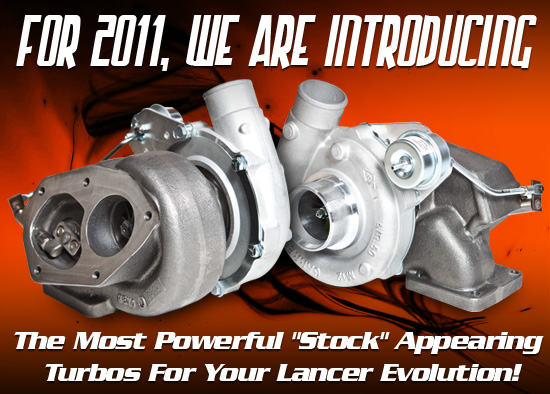
Introducing the most powerful "stock'' appearing turbos for your Lancer Evolution in 2011!


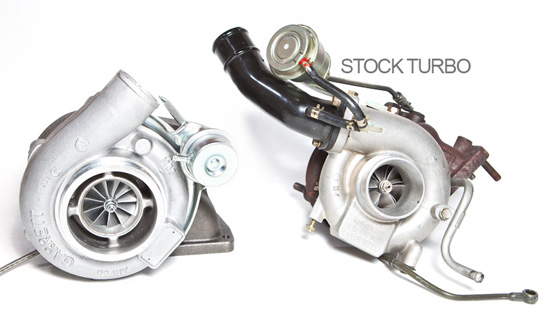
Full kit power without disrupting the layout of the engine bay. Installs in a matter of a couple of hours! It's all possible now and can be done with a factory stock looking engine bay!


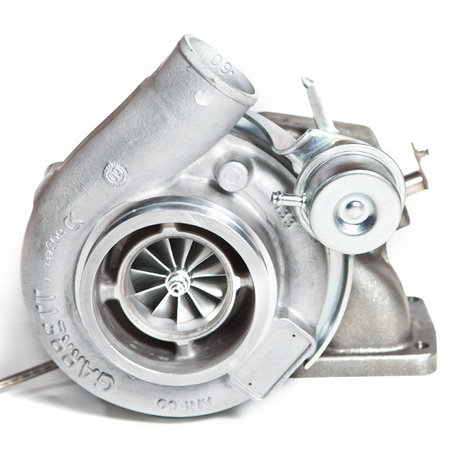
100% bolt-on stock location turbos for your Evo 4 through Evo 9 featuring:
  • Power ranges from 450HP to 700HP
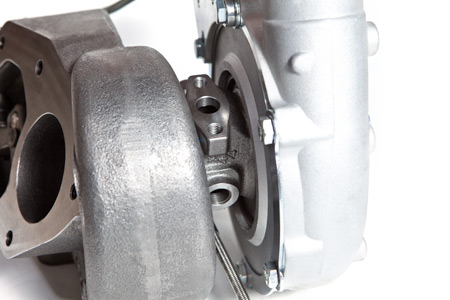
  • Internally wastegated twin-scroll design
  • High pressure actuator for stable boost control
  • Large A/R turbine housing for reduced backpressure and more power
  • High efficiency compressor housing with ported shrouds
  • Garrett dual ball bearing for boost now!
  • Fits, stock exhaust manifold, downpipe, and O2 housing, exhaust, intake
  • 100% stealth appearance


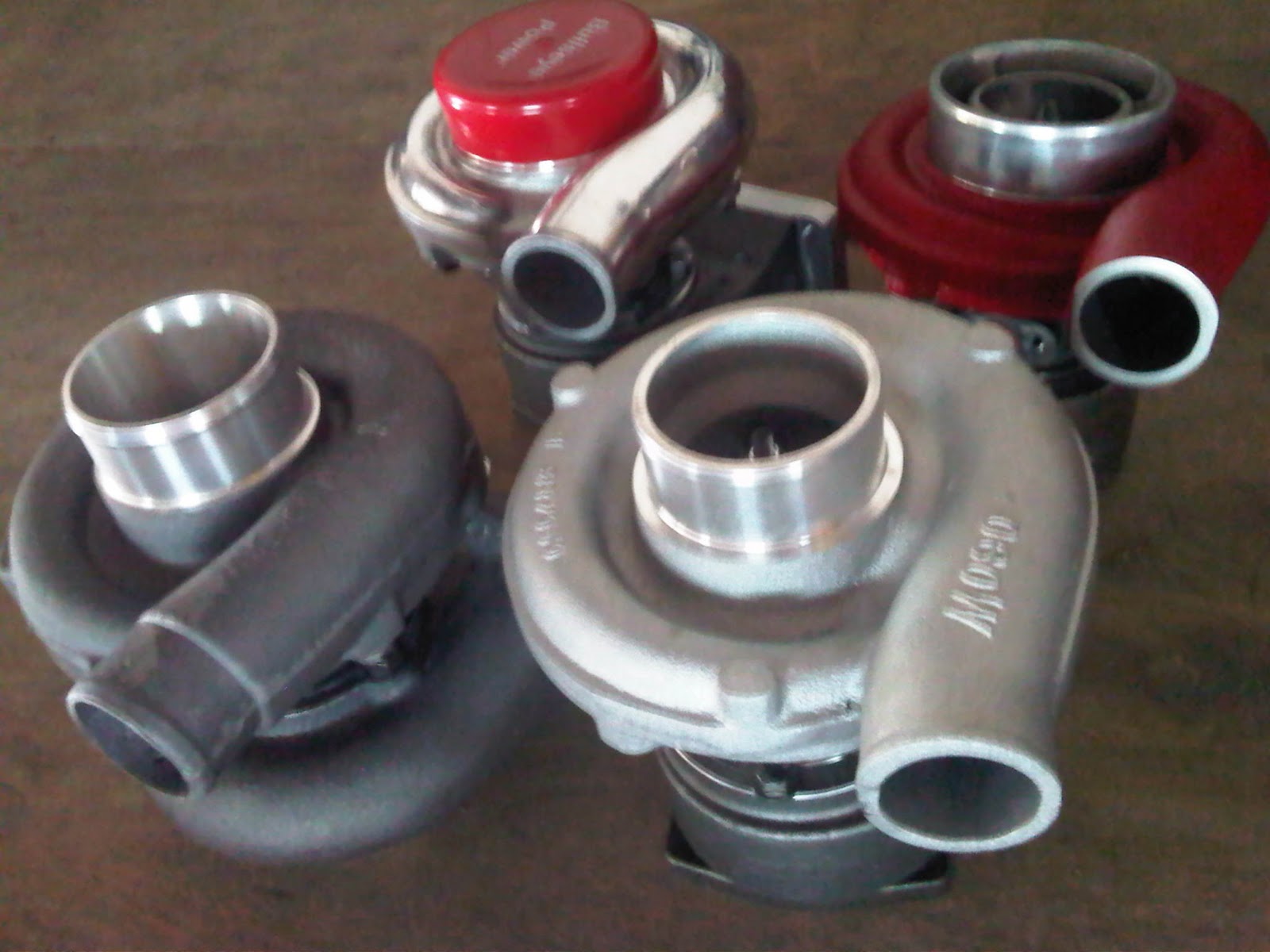
Bullseye Turbo Power


When people talk about race car or high-performance sports cars, the topic of turbochargers usually comes up.A turbo can significantly boost an engine's horsepower without significantly increasing its weight, which is the huge benefit that makes turbos so popular!

Bullseye Power is a leader in design and manufacturing of performance parts. Some of the things Bullseye Power specializes in are turbochargers and boosting equipment. Bullseye is currently manufacturing turbocharger bearing housings, compressor covers, seal plates, cast and billet compressor wheels, turbine wheels, stainless exhaust housings and wastegates. Bullseye is also manufacturing intercoolers, cast aluminum intake and stainless exhaust manifolds for several turbocharged applications. Bullseye’s resources are vast with in house manufacturing we are able to take an idea and turn it into a reality it’s just that simple.

APT already tune for many stock and performance engine up to 600+Hp with Bullseye Turbo.
We would like to thank Bullseye Power for coming on board and stepping up to bat for us.The service and support from Speed Spin Dealer  has given us has been invaluable.Racing a class with the support we receive from Bullseye Power has been alot easier with the wealth of knowledge and experience APT brings to the table.
Street Popular Bullseye Turbo and Drag Machine is

1.S256 Non ETT DSM Plug and Play(300Hp-500Hp) - RM 3500
2.S256 ETT DSM Plug and Play(300Hp-500hp) - RM 4500
3.S259 ETT Billet T3 Flange(400Hp-500Hp) - RM5300
4.TO4E 50Trim T3 AR .70 (300Hp-450Hp) - RM3000


Z Killer Drag Machine 600Hp-900Hp


Street Performance S Series


Advancedperformancetuning@gmail.com